Monday, August 15, 2022

Manufacturing of Polyvinylidene Fluoride (PVDF Material)

Vinylidene Difluoride is converted into Polyvinylidene Fluoride, sometimes referred to as Polyvinylidene Difluoride or PVDF Material, a thermoplastic fluoropolymer that is very non-reactive. The exceptional purity and inertness of PVDF solvents, acids, and bases make it a specialised plastic employed in various applications. Fine powder grade PVDF, a necessary component of premium paints for metals and cement, is readily available on the market. Such PVDF paints maintain their sheen and colour quite well. Numerous industries, including chemicals, electronics, new energy, construction, and pharmaceuticals, are among those that PVDF has successfully entered. PVDF is widely utilised in various products, including piping and tubing, sheets and films, membrane, cable, and an insulator for premium wire.

PVDF Material

PVDF has a low density and is lightweight compared to other fluoropolymers like polytetrafluoroethylene (Teflon), which makes it helpful in the construction and automotive industries. The polymeric sheets and film, frequently used in the electronics, medical, and defence industries and lithium-ion batteries, can be produced using PVDF by injection moulding, moulding, or welding. It is also offered as a closed-cell, cross-linked foam, which is largely employed in aerospace and aviation applications.

PVDF is primarily employed in demanding applications requiring a high level of purity, great mechanical qualities, and excellent chemical resistance. The creep resistance of PVDF is much better than that of other fluoropolymers.

Properties


  • Outstanding creep and fatigue resistance
  • Outstanding thermal stability
  • Highly effective radiation resistance
  • ultraviolet resistance (does not age)
  • Significantly high dielectric constant
  • Working temperature range of -20 to +130 °C

Frequently utilised as an insulation and safety cover in chemical applications.

In the chemical sector, PVDF is frequently used as a protective barrier or insulation. Technical data sheets are where you may find further details on PVDF's characteristics.

Key characteristics:


  • The capacity to withstand heat
  • Superior abrasion resistance
  • Low permeability to the majority of gases and liquids
  • Resistant to weather
  • Minimal weight
  • Strength in mechanics
  • Protection against radiation
  • Effective electrical insulator
  • Protection against chemical corrosion
  • The word recyclable

Applications:


  • Plumbing fixtures and pipes
  • Inlets and outlets
  • Cathodes and anodes in the production of lithium-ion batteries
  • Applications for high-purity semiconductors

In several chemical processing sectors, PVDF is employed as metallic coatings for various applications, including heat exchangers, filters, membranes, and pumps. The service life of metal items can be impacted by conventional liner or coating products, inadequate thermoplastic adherence to a metal substrate, and inconsistent coating application methods. PVDF has an excellent performance in a wide range of corrosive substances. It also provides better temperature resistance, a corrosion barrier, abrasion resistance, and chemical resistance.

Predicting these factors will greatly increase the demand for PVDF during the projection period. PVDF exhibits great solubility in ester and ketone solvents and is used as a solvent dispersion coating for architectural purposes. Due to the crystalline and amorphous phases that make up PVDF's structure, coatings made of this material have outstanding qualities like great flexibility and solvent resistance. Due to its unique properties, including high abrasion, high chemical, wear, thermal, UV, and anti-skid, PVDF is in higher demand in the building and construction sector. During the forecast period, these factors are anticipated to enhance the market.

The top supplier of PVDF Materials fittings, Petron Thermoplast, produced high-quality sheets with great chemical resistance, superior electrical qualities, and the ability to withstand high temperatures. Our devoted customers can purchase PVDF sheets and pipes from us at the most affordable costs.

Thursday, August 4, 2022

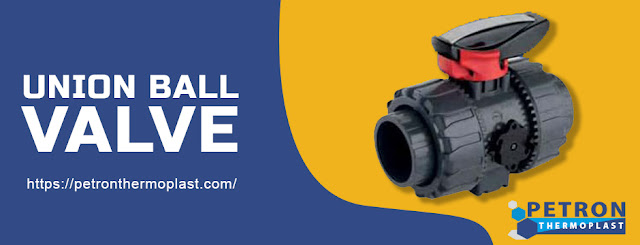
Know Why Are The Best Quality Union Ball Valve Important


Single union valves in India provide physical shut-off for control or service required in irrigation systems in the field or within the main controls. They are appropriate for all applications. A true union ball valve made of PVC is a versatile valve. When in the "on" position, they allow fluid to flow through and stop completely; when in the "off" position, all it takes is a 90-degree turn of the handle!

Why use ball valves?

The term "ball" refers to the semi-spherical shape of the valve's interior. It causes the pipeline pressure to decrease gradually and protects the insides of the valve from damage caused by fluid striking a flat surface. The term "true union" refers to the fact that this valve has multiple parts. True union ball valves have a central body that can be unscrewed and removed from a pipeline, removing the need to completely disassemble a pipeline for regular valve maintenance and cleaning.

Petron Thermoplast offers complete control, assurance, and safety valve solution. Automatic and manual controls are available on our high-performance valves. Our plastic valves are not only low priced but also simple to install and maintain, value-driven, and tailored to a specific need.

Features of union valve:

• PVC union ball valve is made of a high-performance, rigid PVC compound.

• Outstanding chemical and corrosion resistance.

• Frictional losses are minimal.

• Chemically inert. Nitrile rubber O-rings keep it leak-free for a longer period.

• Simple to assemble and disassemble.

• Single and double union connections are available.

What are the applications of ball valves?

Drip irrigation systems are one of the most common applications for PVC valves. These systems are frequently installed over a large backyard garden and used to water a wide range of plants and vegetables. If there were no valves, all harvests would receive the same water. If the irrigation is set up in rows, one for each plant or vegetable, people can install a true union ball valve at the start of each row. It means that when certain rows do not require watering, water flow can be cut off. This allows people to customise and increase their control over your irrigation canal and garden.

Sprinklers and nozzle extensions:

Many PVC projects connect a hose to a sprinkler or a hose extension. These projects are extremely useful for lawn maintenance or creating fun sprinklers for kids to play with, but they can be inconvenient. Walking to and from the stopper can be inconvenient to turn on and off the water! One use for true union ball valves is to connect a PVC hose adapter to a PVC structure. It means you can leave the water on and simply open and close the valve to allow water to flow through the system.

Petron Thermoplast makes quality ball valves of many types. All our products are durable and affordable. So, if you wish to purchase the best quality union ball valve, you can contact us.


Wednesday, August 3, 2022

Oxidation Reduction Potential: The Use of An ORP Sensor


Have you ever been questioned about ORP? The majority of us have a general understanding of what it stands for but are unsure of its specific nature or significance. The efficiency of water sanitizers is gauged by something called ORP, or oxidation-reduction potential. An electrical assessment of a chemical's capacity to oxidize or decrease another chemical, measured in millivolts (mV), is called ORP. Chemical reactions that involve the exchange of electrons between molecules include oxidation and reduction (gaining or losing an electron). ORP evaluates the likelihood that these reactions will take place in your water. In the context of swimming pools, this means that your sanitizer will work more effectively the higher the possibility for oxidation. Water is safer and cleaner when the sanitizer is more effective. It's a lovely thing.

A tiny sample of running water is used to test ORP using a probe, often close to your chemical controller. An ORP electrode plus a reference electrode make up an ORP sensor. Your oxidation and reduction potential are determined by a signal delivered between them. The ORP symbol represents the rate of electron transport and is expressed in mV. The higher the ORP, the better; in the United States, the majority of health agencies consider 650 mV to be the least permissible ORP; if you can obtain above 800 mV, even better. Exceptional water is defined as anything above 850 mV. Did you hear that, huh? The opposites of each other, oxidation and reduction, are two distinct processes. So let's briefly go through the definitions of oxidation and reduction. From this source, we learn the following two definitions.

Why is ORP used?

Because it is practical, typically accurate, and enables us to monitor what is happening in the water electrically, ORP is extensively utilized. ORP is a real-time reading of chlorine's performance even though it does not monitor the quantity of chlorine. Most operators concur that from a health standpoint, disinfection is what counts; chlorine content may not always be as significant as its efficacy. To get more done with less, the ideal situation would be to have a tiny bit of chlorine that is really effective.

We performed some studies, but we haven't yet discovered evidence that an ORP is "too high" or that it reaches a point where it loses value. We know that the ORP should be greater than 650 mV in the ORP sensor, anything over 750 mV is desirable, and anything over 800 mV is outstanding. Other than that, the precise figures depend on operator judgment, although we can all agree that higher is preferable.

How And Why ORP Is Measured

Probe ORP A two-probed sensor dipped in a stream of water is used to measure ORP. Between the two probes, the sensor measures their electrical difference. The two probes are usually silver and platinum or gold, respectively. Another factor to take into account when adding enzymes to your water is that these results might be impacted by how clean the probes are. This also holds true for other kinds of system probes, such as chlorine probes.

Since most pool automation systems manage chemicals in real-time, they constantly depend on precise information. This is because ORP controllers can keep up with pH variations, which happen more often than changes in other variables. The other option is only to use water testing, which typically requires a few hours between results.

If the ORP of your pool is low yet the chlorine level is high, The pH and organic pollution are the two most likely offenders (bather load). The conductivity between the probes slows down as the number of organics in the water increases. The majority of controllers measure pH as well, so they can determine whether pH is the issue. If pH is in the proper range, organic waste is probably the main cause of the issue.

Strong ORP sensor If the ORP of your pool is high yet the chlorine level is low, Either your probes are broken, or kudos, your water quality is excellent. It's uncommon but absolutely conceivable. For instance, despite having less than 1 ppm of chlorine, a sizable commercial pool in Arizona has been able to maintain 750 ORP! Consider that. The pool was indeed oxidizing even with a little elevated pH. Please visit the website of Petron Thermoplast and buy high Quality ORP sensor today!


Sunday, July 31, 2022

Conditions Under Which You Should Install A PVDF Ball Valve Rather Than A Metal Valve


Although there are many different kinds of plumbing valves, metal and plastic valves are the two most used. While metal has traditionally been preferred because of its durability and strength, plastic is becoming more common in a wide range of applications. Why? Installation is made much simpler by the use of plastic because it is less expensive, won't corrode, and is easier to handle. Additionally, plastic lasts longer than other materials and requires little to no upkeep.

You might be wondering why someone would choose anything other than the PVDF ball valve given all of these benefits. Make sure you choose the right material for the job because plastic works best in specific systems and conditions. If you don't, your valve can be damaged, which would cause the entire system to stop working. But there are a few instances where plastic can successfully take the place of metal. Now let's look at these.

What circumstances allow me to substitute a PVDF ball valve for a metal valve?

Before deciding to immediately choose plastic plumbing valves over metal ones, take into account the following factors:

• What temperatures and pressures will be applied to the valve? Due to its excellent heat resistance, metal is widely employed. You should ensure that the material you choose can withstand high temperatures and pressure because some varieties of plastic valves are also heat-resistant.

What are the chances of producing shock pressure? For example, it is not advised to damage plastic with water hammers. Using durable plastic valves of excellent quality can help you avoid this issue!

• Check your level of chemical resistance. If chemicals come into contact with plastic, will they be able to survive? Today's plastic valves are often sturdy enough to tolerate chemical exposure.

• Do you need a fix that will work for a few months to a few years? Plastic valves do not rust, corrode, or pit like metal valves do. Additionally, they have an extremely smooth interior lining with a high flow coefficient that keeps constant flow rates throughout time.

• Will the plastic part be subjected to any stress? As this is the most frequent reason for installation failure, ensure that the component will never be under tension, not even while it is in use. The misalignment of the flanges and the valve within the metal system are warning signs to watch out for.

In relation to the Petron PVDF Dual Block 2-Way Ball Valve

The greatest heavy-duty ball valve quality for the water and wastewater industries, as well as the best heavy-duty ball valve series for the agricultural industries, is Petron Thermoplast's PVDF Dual Block 2 Way Ball Valve Series. The Dual Block Series is a line of PVDF ball valves we offer. A Dual Block 2-Way Ball Valve is one that seals off pressure from both ends using two sitting surfaces made of PVDF.

The fluid's characteristics, pressure, and temperature must all be taken into account while choosing a valve. On the other hand, the valve's intended use may be the most crucial factor. You can choose from a variety of settings depending on your procedures, your goals, and the needs of your industrial water application. The P2 Valve excels in operational circumstances where vibration or thermal expansion may jeopardise the performance of the standard thanks to the PVDF Dual Block 2-Way Ball Valve technology. Under rigorous service conditions, a patented union-nut locking system prevents back-off. No specific tools are needed to set up the system, which is straightforward.


Know about The Best PVDF Ball Valve And Its Importance


PVDF Ball Valves are used in high-purity liquid transportation applications such as medical, pharmaceutical, cosmetic, research, and other high-quality systems. PVDF pipe is made of Polyvinylidene fluoride and contains no plasticizers, pigments, or other additives that could potentially pollute the liquids being transported. PVDF ball valve is the best option when any type of contamination is not acceptable.

It's chemical and impact resistance makes it ideal for harsh environments. The Socket Fusion method is used for joining, which provides strong, durable, and tightly sealed joints in high-purity piping systems. This heat fusion method employs a thermostatically controlled heat tool to quickly create permanent and tamper-proof joints that undertake well in harsh environments.

What is a ball valve?

A ball valve consists of the best quality valve body and a large sphere with a central hole equal to the inner diameter of the pipe. As the ball rotates, the valve offers the through conduit or full bore required for unrestricted fluid flow and scrapers or pigs in the fully open position. A ball valve provides very little flow resistance in the fully open position. A ball valve's L/D ratio is approximately 3.0 when fully open. Ball valves, like gate valves, are typically used in open or closed positions.

Unlike the gate valve, the ball valve requires only a quarter turn of the hand wheel to move from fully open to fully close. Such rapid closing and opening of a ball valve may be important in some installations where quickly isolating pipe sections are required in an emergency.

The ball valve is a low-cost alternative to other types of valves. Ball valves utilize a metal ball with a hole bored through the centre sandwiched between two seats to control flow. Ball valves, used in many hydrocarbon applications, are competent in throttling gases and vapours and are especially useful in low flow situations. These valves open quickly and provide a very tight seal on difficult-to-hold fluids.

The advantages: 

The ball valve is the most commonly used fluid shutoff valve in onshore and offshore upstream oil and gas production facilities. They are also used in furnace fuel gas systems. The following are the benefits of plug valves.

• High-pressure resistance

• Convenient assembly

• Opening and closing in a flash

• Simple upkeep

• It is simple to operate (electrical, pneumatic, or hydraulic actuator)

• Appropriate for pigging operations

• Drop in pressure

• Can be repaired in place

• Adapted to various hydrocarbon stages encountered (liquid, gas, and mixture).

Petron Thermoplast offers the best quality ball valves. Our valves are durable, so they can easily be used for various industrial usages. You can get the best PVDF ball valve at an affordable cost.


Thursday, July 28, 2022

Why Consider The Best Straub Coupling for Various Industrial Applications?


A pipe coupling is essential in the repair of water and sewer pipe networks. Straub coupling provides a quick method of connecting pipes of all sizes and materials. Couplings can be used in almost any pipe joining condition, from cooling return pipes in power stations to gas and water supply systems.

You can find an appropriate pipe coupling near you for water and sewage systems. You should learn everything you can about the various types of couplings, their implementation details in the industry and how they work.

Why is coupling required?

Couplings are frequently overlooked until the task is nearing completion. Clients frequently buy whatever a supplier has accessible rather than the best solution for the system as time runs out.

Understanding the implementation and coupling requirements allows the user to select a better coupling solution. Understanding the application details is one of the most fundamental and frequently overlooked aspects of proper coupling determination.

There are more factors to consider than the undeniable torque and shaft issues. The coupling chosen should address the vast bulk of the applications based. Although several different coupling types may be used for a specific application, each type differs in cost, unpredictability, and execution

What do couplings do?

  • All couplings have the same basic functionality; they transmit power, compensate for axial movement, and accommodate misalignment. Couplings are also used to absorb shock or vibration. The right coupling is determined by the four basic shaft movement or misalignment circumstances.
  • Parallel misalignment occurs when the two shafts do not share a pivot hub. Their end appearances may be parallel, but their centre axes are uprooted in relation to one another.
  • The misaligned shafts may be symmetrical or unsteady at the edge. When two shafts are not parallel or coaxial, angular non-fitting occurs.
  • End drift occurs when one or both shafts exhibit pivotal motion, moving in and out. Temperature variation can also cause warm extension and variation in shaft position.
  • Torsional adaptability develops torsional forces in planes opposite the shaft axis. These movements are retained and hosed by an adaptable torsional coupling. It is usually caused by shock or vibration.

Why choose Straub coupling?

Straub couplings are the most convenient way to connect pipes of any material. They do not necessitate the use of any special equipment or pipe-end preparations. Construction is flexible and lightweight. Straub couplings are used in shipbuilding, sewage treatment, general industry, and fabrication to handle pipe misalignment and vibration. People use them to substitute fused, flanged, threaded, or grooved pipe joints.

The Straub system removes the need for pipe end preparation, saving time and money. Straub couplings are delivered fully assembled and ready to use. The only tool required for the job is a torque wrench. Straub couplings are lightweight and low-profile, making them easy to handle and install in even the most confined spaces. The innovative lip seal design seals even on rough pipe surfaces.

Straub couplings join nearly any plain end pipe or tube, including steel, stainless steel, ductile iron, FRP, PVC, CPVC, and others.

Petron Thermoplast makes the best quality products and sells those at an affordable cost. You can purchase those and use them as per your industrial requirements. Hence, you should use our efficient and durable Straub coupling item.

Know about The Best Quality PVC Ball Valve for Industrial Usage


A PVC ball valve is extremely long-lasting and cost-effective and can be used to regulate the flow of water, air, corrosive chemicals, acids, and bases. A PVC or a polyvinyl chloride ball valve is a plastic on/off valve with a rotary ball, and a bore attempting to turn the ball a quarter turn can stop fluid flow. Like all ball valves, PVC valves halt the flow by rotating a ball 90°. PVC ball valves have high resistance to lower temperatures and pressure while having low mechanical strength.

Why ball valve?

A rotating ball known as a rotary ball is at the heart of PVC ball valves. The mechanism for turning the ball is a stem at the top of the ball, which can be done either manually or automatically based on the design of the valve. When the handle is properly parallel to the pipe, the valve is open; when it is perpendicular to the pipe, the valve is closed.

These valves are made of nonflammable plastic and can withstand temperatures ranging from -14°C to -140°C. With a lightweight body, compact design, ease of installation, and the ability to adapt to a wide range of applications, they have many of the same uses as traditional ball valves.

PVC ball valves types:

The various types of these ball valves are intended for specific applications. They are classified according to the number of ports, seat types, body assembly, ball access, and bore size. The implementation, described by the pressure, size, temperature, number of ports needed, end connectors, and configuration, determines the type of ball valve to be used.

Vinyl resin, a thermoplastic material that shifts physical characteristics when heated or cooled, is used to make PVC valves. PVC, like all thermoplastics, is an eco-friendly plastic that can be melted and reshaped multiple times. PVC is popularly used in the production of piping, in addition to its use in the manufacture of PVC valves.

• PVC ball valves that float:

The ball in a floating ball valve is suspended in the flow and held in place by the compression of its seats. With a quarter turn of the handle, the shaft is joined at the top of the ball, allowing for sleek positioning from open to close. When the ball is turned, it presses against its seats, causing the flow to stop. The valve gets its name from the ball that floats within the valve body.

• CPVC:

It is chlorinated PVC, which is made similarly to PVC but differs in the amount of chlorination it receives. Chlorine atoms are included in the polymer resin until it has a chlorine content of 60% to 70%. As a solid plastic, CPVC reacts differently regarding heat absorption and release, cooling and heating, and pressure response. In the proper pressure and chemical conditions, CPVC products can operate at temperatures ranging from 200° F to 230° F.

Because of its unique properties, CPVC is suitable for various applications, from residential plumbing to chemical industry synthesis. Though not recommended for pressurized gases or air, CPVC can be employed in high-pressure liquid applications.

Petron Thermoplast provides the best quality ball valves to its customers. We always thrive on making durable plastic products that industries can use. So you can purchase our best PVC ball valve efficiently.


What are a Union Ball Valve and its Applications? Know it from Petron Thermoplast

Using PVC true union ball valves to start and stop flow in a system is a simple technique. True union valves come with a carrier that may b...