Wednesday, July 27, 2022

Everything you should know about PVC Ball Valves and Ball Valves

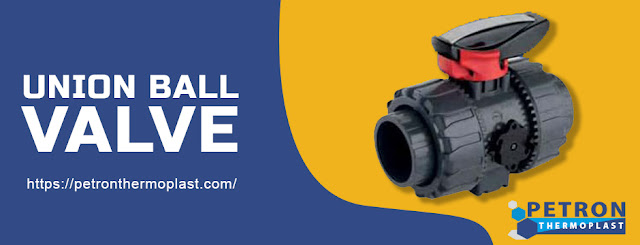
A rotary ball with a bore is used to operate a ball valve in order to control and stop the flow of liquid or gas Rotating the ball a quarter turn, or 90 degrees, will cause the medium going through the pipe to either flow or block. Over its career, ball valves offer consistent sealing and longer service life.They are specially constructed so that rotating them past a 90-degree angle is the only way to open and close the ball valves. Because of their dependable and airtight sealing, these valves are a well-known industrial option. Because of its ability to function well even after extended inactivity, the ball valve is a frequently used and well-liked shut-off valve for controlling and blocking pipeline flow. Additionally, ball valves are more resilient to contaminated media than most other types of valves. The "Water & Wastewater, oil, and gas sector" uses the best PVC Ball Valve most frequently, but they can also be used in many other industries. It is necessary to bleed the valve chamber and isolate the piping for repair.

PVC ball valve

Typical Types of Ball Valves

  • Standard Hydraulic Flanged Vented (Threaded)
  • In addition to dimensions and sizes, ball valve types can also be categorized depending on the metal and materials used in their production. To meet the needs of various sectors and applications, ball valves come in a variety of sizes and dimensions.

Ball valve uses

Numerous industries and hydrocarbon processing applications employ ball valves. Residential buildings also make use of it.

They have the ability to throttle gases and vapours, which is particularly helpful in low-flow scenarios. These valves are a common and well-liked control valve because they quickly open and close tightly on fluids that are difficult to contain. Ball Valves are used for tight shut-off requirements and flow control.

Uses for ball valves include

  • Manufacturing Sectors in the Oil and Natural Gas Industry
  • Storage of Chemicals for Residential Uses

Specifications for a ball valve

One must read the ball valve specifications before installing or ordering the ball valves. The selection of the ball valve must take into account the necessary ball valve parameters in order to achieve the intended outcomes and control the fluid or gas.

To mechanize and regulate such materials with varying temperatures, you need to install the proper ball valve material. All industrial settings and facilities have varied productions, raw materials, and processes that call for different materials and temperature setups. To attain the intended outcome and lifetime, one must take into consideration the ball valve specs while choosing the correct required ball valve with the proper diameter to fill the factory machines and setup.

Benefits Of Ball Valves


  • Low-maintenance and compact design
  • Does not require lubrication
  • The most affordable of all the valves
  • Dependable service
  • Open and shut swiftly

Ball valves can be designed in a variety of ways.

Visit petronthermoplast.com and place an order for the ball valves that you need if you're seeking for a ball valve manufacturer or supplier in India to acquire the top quality ball valve with various requirements requiring different metals and dimensions for any kind of purpose or installation. The price list for the ball valve is provided in our online store; it varies depending on the ball valve's dimensions and the materials used to make it.

Understanding Us:

Petron Thermoplast offers the best heavy-duty PVC ball valve series for the agriculture sectors as well as the best heavy-duty ball valve grade for the water and wastewater industries. We offer union ball valves that are of the same caliber as those made by Hayward and Spears.

Monday, July 25, 2022

PVDF Pipe - Thermoplastic Piping

A high molecular weight fluorocarbon with outstanding abrasion resistance, dielectric characteristics, and mechanical strength is polyvinylidene fluoride (PVDF Pipe), also known as Kynar®. With a limited usage range extended to 302o F, these qualities are maintained over a temperature range of -40o F to 250o F. The majority of strong acids, aliphatics, aromatics, alcohols, wet or dry chlorine, bromine, and other halogens, as well as chlorinated solvents, are highly resistant to Kynar®. From 1/2" to 6", Kynar® is offered in natural or red colours. High purity water, chemical processing, pharmaceutical manufacturing, and UV-sensitive compounds are examples of typical applications.

PVDF pipe

Key Features

  • Excellent Chemical Resistance
  • Superior Abrasion Resistance Socket Fusion Joining System Standard Pipe and Fitting Sizes Temperature Range of -40o F to 250o F
  • Pipe: IPS Schedule 80, 1/2" to 6"
  • 1/2" - 12" SDR 21 & 33
  • 1/2" to 6" IPS Schedule 80 fittings
  • 1/2" - 12" SDR 21 & 33
  • Sheet and Rod, Flexible Tubing, and Other Forms


PVDF Pipe and Fittings, General/Chemical Grade

High molecular weight polyvinylidene fluoride (PVDF) in the Super Proline general/chemical grade has outstanding abrasion resistance, dielectric characteristics, and mechanical strength. There are sizes ranging from 1/2" to 16". General/chemical grade PVDF is measured in SDR 21 (1/2" - 10") and SDR 33, in contrast to Kynar®, which is Schedule 80. (3" - 12").


Pipe and Fittings Natural Kynar® PVDF Schedule 80

Natural Kynar® is completely unpigmented and transfers materials without being contaminated. When conveying deionized water and other liquids with leaching properties, natural Kynar® is the best material to use in the electronics, pharmaceutical, and food and beverage sectors. Rust and scaling are removed from corrosive slurries to vinegar using natural Kynars® superior chemical and corrosion-resistant piping material.


Schedule 80 Pipe and Fittings in Red Kynar® PVDF

Fluorocarbon material called Red Kynar® is durable, resilient, and abrasion-resistant. Up to 250° F, it maintains the majority of its strength and resists distortion. Red Kynar® is best suited for handling wet or dry chlorine, bromine, and other halogens since it is chemically resistant to the majority of acids, bases, and organic solvents. Red Kynar® offers a unique combination of strength, chemical resistance, and operating temperatures that is unmatched by other solid thermoplastic pipe components.


How is PVDF manufactured?

Chemical synthesis is a polymerization process used to create PVDF. Polymerization is used to create plastic-like polymers such as polyethene, PVC, and polypropylene. Plastic pipe and fittings, particularly polyvinylidene fluoride (PVDF) pipe and fittings, come in a variety of quality and consistency levels. Alternatively: "monomer." PVDF pipe has a temperature restriction of 248°F (120°C), whereas PVC piping has a rating of up to 248°F (120°C). PVDF produces chemicals (such as corrosive sulphuric acid) using radioactive processing waste and air plenum. In order to define a long molecular structure known as a polymer, which in this case is a plastic, and polyvinylidene fluoride (PVDF), also known as Kynar, it is suggested that the single vinylidene fluoride (VDF) units are joined from the beginning to finish. VDF serves as the fundamental raw element in the production of PVDF.

A top producer of thermoplastic industrial engineering materials, PETRON THERMOPLAST, with its PVDF pipe manufacturing, accepts industrial projects for chemical and wastewater treatment plants.

Friday, July 22, 2022

How a Full Fledged Plastic Manufacturer Offers Product Quality


It's critical to select a knowledgeable and renowned plastic components manufacturer when you require high-quality plastic parts produced and supplied on time and in accordance with specifications. At Petron Thermoplast, we make use of our team of skilled machining specialists and our fleet of top-tier equipment to produce accuracy, quality, and promptness that exceeds expectations. We ship vital PVDF Plastic materials to customers throughout the northeast and the whole of India directly from our plant.

Plastic Components Manufacturer in India

We have built a reputation for quality and steadfast dependability throughout the years. We are believed to deliver:

  • Industry-specific solutions – We can manufacture parts for sectors ranging from oil and gas to food and beverage, thanks to cutting-edge machinery. No matter the application, our machining specialists assist our clients in selecting the appropriate components to fulfill their specific project requirements.
  • Exceptional precision and tight tolerances – We know that timely and accurate cutting with close tolerances is essential for projects to succeed across all sectors. In response, we care for sophisticated equipment and work tirelessly to develop and improve our offerings. Our CNC saws, routers, and milling machines all exhibit outstanding capabilities; for instance, our computer-driven milling machines can create parts with surface finishes as smooth as 15Ra and tolerances of +/-.001.
  • Quick turnaround – Our strategic location, cutting-edge equipment, and well-honed production schedules enable us to quickly produce and transport components to customers in India. We provide expedited manufacturing and delivery solutions for customers working under time constraints.

Our CNC programmers and machinists are prepared to identify and produce a durable solution that satisfies all requirements and priorities, regardless of how complex the material is or how severe the environment must survive.

Industrial plastics are among the most frequently used materials for valves. With new materials consistently being produced to target specialized markets, these polymers are specially created to fulfill the continually rising demands of numerous sectors. PVDF Plastic is utilized in a variety of ways across all of the industries we produce for.

Petron Thermoplast, The Leading Plastic Valve Manufacturers

  • Agriculture: In the agricultural sector, pinch valves and irrigation control valves are typical parts. Industrial plastics provide the ideal, long-term option due to their resilience to wear and corrosion.
  • Aviation/Aerospace: In turbines, ball valves are frequently employed. A plastic industrial valve can easily endure challenging circumstances because of its strength and impact resistance.
  • Oil & Gas: In the oil and gas sectors, control valves are utilized to offer process control over flow rate, pressure, and temperature. This application benefits greatly from the exceptional heat resistance of our polymers.
  • Waste Management: Due to their extreme chemical processes and persistent dampness, wastewater treatment facilities provide difficult environmental conditions. Plastics' low porosity and excellent chemical resistance prevent them from absorbing a lot of pollutants, which contributes to the creation of safer, more effective waste treatment facilities.

Partner with Us for All Your Advanced Plastic Machining Needs

Examine the PVDF's mechanical, thermal, electrical, optical, and other physical characteristics. Using our interactive characteristics table, you may sort, compare, and choose the PVDF Plastic material most suited for your application. Visit the website now!

Thursday, July 21, 2022

Analysis of Processing Methods of HDPE Pipe Fittings


A thermoplastic polyolefin made by ethylene copolymerization is high-density polyethylene (HDPE). HDPE was first made available in 1956, although it hasn't yet achieved a mature state. New markets and uses for this all-purpose material are continually being developed.


Since there are no branched chains on the molecular chain in Ziegler Natta polymerization, which produces HDPE most frequently, the molecular chain is structured uniformly and has a high density. Ethylene is employed as raw material and oxygen or organic peroxide as an initiator in a low-pressure tube or kettle reactor in this process. Buy HDPE Pipe Fittings from Petron.

Characteristics of HDPE Materials


Basic Characteristics


With a specific gravity of 0.941 to 0.960, HDPE is a white, opaque waxy substance that is lighter than water. It may be extended and is flexible and ductile, yet it is a little tougher than LDPE. It has no flavor and is non-toxic.

Combustion Characteristics


It is combustible and can keep burning even after the fire has been extinguished. The flame has a blue bottom end and a yellow higher end. It will dissolve while burning, pouring liquid instead of producing black smoke. It also emits the scent of burning paraffin at the same time.

Key Advantages


Excellent electrical insulation, acid and alkali resistance, resistance to organic solvents, and ability to retain some hardness at low temperatures. Although the surface smoothness is not as excellent as PP, the surface hardness, tensile strength, stiffness, and other mechanical strengths are greater than LDPE, comparable to PP, and tougher than PP.

Main Disadvantages


Low surface hardness, low surface hardness, easy scratching, low surface hardness, quick stress cracking, poor mechanical characteristics, poor air permeability, easy deformation, easy aging, easy brittleness, brittleness lower than PP, and easy deformation. Printing is tricky. Electroplating is not permitted, surface discharge treatment is necessary during printing, and the surface is dull.

Application


used to extrude water pipe, rope, weaved bags, fishing nets, and packaging film; Extrusion blow molding containers, hollow goods, and bottles; injection molding low-grade daily essentials and shell, non-load-bearing components, rubber boxes, and turnover boxes.

Injection Molding Process


One-fifth of the HDPE manufactured in China is used in a variety of products, from 5-gsl cans to reusable thin-walled beverage cups. Injection molding typically has a melt index between 5 and 10, low toughness, and good flowability. Thin-walled packaging for food and everyday necessities is also used. Tough and durable paint cans and garbage cans with high resistance to environmental stress cracking are also used.

The average HDPE has a melting point of 142 °C and a decomposition temperature of 300 °C; it has a wide temperature range that may be adjusted for injection. The typical service temperature for injection molding is between 180 and 230 °C; because it is an olefinic plastic, it does not absorb water and does not require drying during manufacturing. Although it can be dried at 60 °C for an hour to remove floating water for the sake of product quality, the thin-walled goods might not have glue because polyethylene melts with high viscosity and has a low flow length ratio. Consequently, the gate and runner are substantial; Static electricity can easily be carried by the product, and Angstrom can be readily absorbed by the surface. The overflow value is 0.05mm, and the shrinkage rate is 16. Buy high-quality HDPE Pipe Fittings online only at Petron Thermoplast.

What Distinguishes PVDF Material's Strength From Their Stiffness?


Stiffness, strength, hardness, and toughness are some of the main mechanical characteristics of plastic. Although these concepts may all seem identical, each one of them has value in and of itself. Trust Reading Plastic & Metal to explain the distinction between plastic strength and stiffness so you can select the appropriate material for your project. They have decades of expertise.

Difference Between Strength and Stiffness

Flexural modulus, or a material's capacity to bend, is a property that describes the stiffness of plastics and is expressed in pounds per square inch (psi). The stronger the material, the greater the flexural modulus; the more flexible, the lower the flexural modulus. In addition to flexural modulus, flexural strength or tensile modulus are other terms used to describe the stiffness of polymers. Choose high-quality PVDF Material online only at Petron Thermoplast.

This word conflation may make it difficult to distinguish between stiffness and strength. The amount of stress a plastic can bear when it is stretched or pushed without breaking is known as the material's tensile strength or ultimate strength. The capacity of a material to disperse a load and fend off deformation or deflection functional failure is referred to as stiffness.

Plastic Options to Choose From

Plastics with High Tensile Strength

  • Nylon: Nylon, which has a tensile strength of 12,400 psi, is used for a variety of things, including clothes, rope, rubber reinforcement for things like automobile tires, and as a low-strength metal alternative. Nylon has a reasonably high melting point (450oF), great abrasion resistance, high strength, and outstanding tensile qualities. It is highly resistant to chemicals and is not harmed by alcohols, solvents, or oils.

  • PAI (Torlon®): Polyamide-imide (PAI), which has a remarkable tensile strength of 21,000 psi, is the ultimate high tensile strength plastic. This high-performance plastic is naturally low-flammable, smoke-emitting, has strong wear and radiation resistance, and has high thermal stability. Jet engines, internal combustion engines, thrust washers, and printed circuit boards all use PAI components because they have the highest strength of any unreinforced polymer.

Plastics with Superior Stiffness

  • Acetal – This rigid technical plastic can retain intricate, precise tolerances and is low-friction. With a flexural modulus of 14,300 psi, homopolymer acetal (Delrin®) is exceptionally stiff and has high wear, abrasion, and chemical resistance qualities.
  • PPS – PPS is well recognized for having the broadest chemical resistance of any sophisticated engineering plastic. However, it also has a strong 21,000 psi flexural modulus. PPS offers good hydrolysis resistance, strong dielectric strength, superior electrical characteristics, and a very low coefficient of linear thermal expansion. It also retains its stiffness across a broad temperature range.

Plastics with Strength & Stiffness

  • PEEK – PEEK is a powerhouse all-around, with a continuous service temperature of 500oF, high stiffness (24,000 pressure), strength (14,000 psi), and exceptional chemical resistance. PEEK also exhibits exceptional fatigue and stress-crack resistance, high creep resistance, and extremely little moisture absorption.
  • Ultem® – PEI resins, like Ultem®, have excellent enhanced temperature resistance, wide chemical resistance, and high stiffness and strength. Ultem® provides consistent rigidity and strength up to 200oC/392oF and has a flexural modulus of 22,000 psi. Additionally, it exhibits high stress and cracks resistance when exposed to acids, alcohols, and other chemicals and is naturally flame resistant in most grades.

The most cutting-edge polymers are PVDF Material on the market, including those with exceptional rigidity and high tensile strength, which may be machined to perfection at Reading Plastic & Metal. We can mill and construct your components to retain precise tolerances in addition to assisting you in choosing the right material.


Monday, July 18, 2022

The Characterization of Polyvinylidene Fluoride

Modern polymer polyvinylidene fluoride (PVDF) is employed in numerous applications. It is used in biology, chemistry, and electronics due to its remarkable resistance to chemical or heat degradation and minimal reactivity. The ratio of crystalline phases can be changed by enriching the polymer with a readily available and affordable form of graphite. It has been discovered that there is a correlation between the ratios of crystalline phases and many properties, including piezo- and triboelectric properties and the dielectric constant. Numerous techniques from the structural, chemical and electrical points of view have been used to observe these changes. The outcomes of these techniques have been described to serve as a foundation for additional investigation and testing of the applicability of this combination material in more intricate constructions and devices.

Polyvinylidene fluoride

The characteristics of polyvinylidene fluoride have been improved nearly immediately through use and extensive modification. It is feasible to improve the PVDF films' performance in challenging settings and maintain and improve their usefulness as sensors and actuators by combining them in nanocomposites with other materials. Carbon is one of the most widely used materials to combine with PVDF. The subject of numerous papers is the production of hybrid composite films from PVDF and carbon to use with carbon quantum dots for the manufacture of films or the use of carbon and PVDF to enhance its piezoelectric capabilities.

How is PVDF produced?

1,1-difluoroethylene (CH2=CF2) is free-radical polymerized to create PVDF resin. Polymerization occurs in an emulsion of 10-150°C and 10-300 atm pressure. The material is subsequently transformed into sheets, rods, tubes, and films.

PVDF polymer is typically produced using either hexafluoropropylene or chlorotrifluoroethylene (CTFE) (HFP).

Compared to PVDF homopolymer grades, the PVDF copolymer produced by HFP exhibits greater flexibility.

Even more so than HFP-made polymers, CTFE-made composites are superior. They offer a great low-temperature performance range, are less likely to shrink, and are more flexible. Polyvinylidene Fluoride is subjected to ionizing radiation utilizing crosslinking, allowing for several alterations to the thermal and mechanical properties. Additionally, the polymer has limited compatibility with various resins, including acrylic, methacrylic, and acrylic rubbers.

Properties of PVDF Material - 

1. PVDF contains a semi-crystalline polymer that is 50% amorphous, as was previously mentioned. A relatively small percentage of the VDF units are linked head to head, whereas most VDF units are connected from tail to head.

The fluoropolymer can be found in four different shapes.

An alignment is made to achieve the maximum dipole movement in the same direction with the C-F bonds opposite one another. Regarding the phrase, it is the responsible phase due to the resin's piezoelectric properties.

Zero net polarization occurs when the dipole moves in the opposite direction from crystallites.

2. Mechanical Characteristics: PVDF has an excellent tensile modulus but performs poorly in impact strength. HFP and CTFE rearrangements can increase flexibility and impact strength while lowering the tensile modulus.

PVDF wouldn't drop and isn't combustible. It offers a respectable level of UV light resistance and self-extinguishes.

3. Physical Characteristics: Among commercial fluoropolymers, the polymer possesses one of the highest heat deflection temperatures under load (148°C @0.5Mpa) and the lowest melting point (178°C).

Compared to other fluoroplastics, PVDF polymers have lower imbuing values due to their high surface tension and crystallinity. Gases and liquids both exhibit the same imbuing effects. However, the crystalline modification of parts is necessary for the imbuing capability.

Where can you find it?

A top producer of thermoplastic industrial engineering materials, PETRON THERMOPLAST, accepts industrial projects for chemical and wastewater treatment plants. Examine the polyvinylidene fluoride's mechanical, thermal, electrical, optical, and other physical properties. Values may change depending on the brand. For more detailed information regarding a specific brand, kindly ask your Petron Thermoplast specialist.

Wednesday, July 6, 2022

Some Crucial UPVC Pipe Facts - UPVC Pipe Manufacturer


Plumbing systems in both residential and commercial buildings frequently employ UPVC pipes. They are renowned for providing prompt service. UPVC pipes made by UPVC Pipe Manufacturer are perfect for delivering potable water since they are known for being non-toxic and chemical-free. They are utilized for carrying chemicals like chloride in industrial settings due to their chemical resistance.

Here are some crucial UPVC pipe facts that each user should be aware of:

100% Lead-free

The issue of lead poisoning has been acknowledged on a global scale. Some low-cost pipes contain lead, which poses a genuine risk to the water's purity. Lead and other hazardous metals are not present in our UPVC pipes. Our UPVC pipes are safer than pipes made of metal and concrete since they are constructed from non-toxic material. Our UPVC pipes are the perfect choice for delivering drinking water since they are completely lead-free.

Resistant To Chemical And Corrosion

UPVC pipes are chemical-free and do not rust. Our UPVC pipes are constructed from a substance that is non-toxic in nature. The UPVC popes don't react with the chlorine in the water because of this. UPVC pipes don't leak or break easily since they don't rust or corrode.

Zero Build-ups

Because there are so few risks of buildup and deposits, UPVC pipes are recommended. They are therefore perfect for sewage pipe systems. Our UPVC pipes do not require as much regular cleaning and maintenance as metal pipes do because of their anti-scaling feature.

Easy Installation

Because our UPVC pipes are lightweight, they are simple to handle, transport, and install. Installation doesn't need any specialized equipment for them. All of this lowers the expense of shipping and installation.

Operational Costs

Our UPVC pipes do not easily rust or leak, thus they do not need to be maintained frequently. They are therefore an affordable option.

100% Leakproof

Our UPVC pipes offer a continuous and leak-proof water supply. One-stop solvent cement is used to create a junction that is completely leak-proof.

Durability

Our UPVC pipes are a wise replacement for GI pipe systems because of their outstanding tensile and impact strength. Our UPVC pipes are perfect for outdoor applications since they are also UV resistant. Because of its high resilience and ability to handle high pressure, our UPVC pipes and fittings are a great option for plumbing applications.

The leading UPVC Pipe Manufacturer is Petron Thermpplast. UPVC pipes are known to last for decades when put correctly. High mechanical strength and corrosion resistance are two qualities that set our UPVC pipes apart. They are capable of withstanding any risky situation and stress. Visit the website now!


What are a Union Ball Valve and its Applications? Know it from Petron Thermoplast

Using PVC true union ball valves to start and stop flow in a system is a simple technique. True union valves come with a carrier that may b...